
Bathroom Cleaning Tools: Must Have Essentials
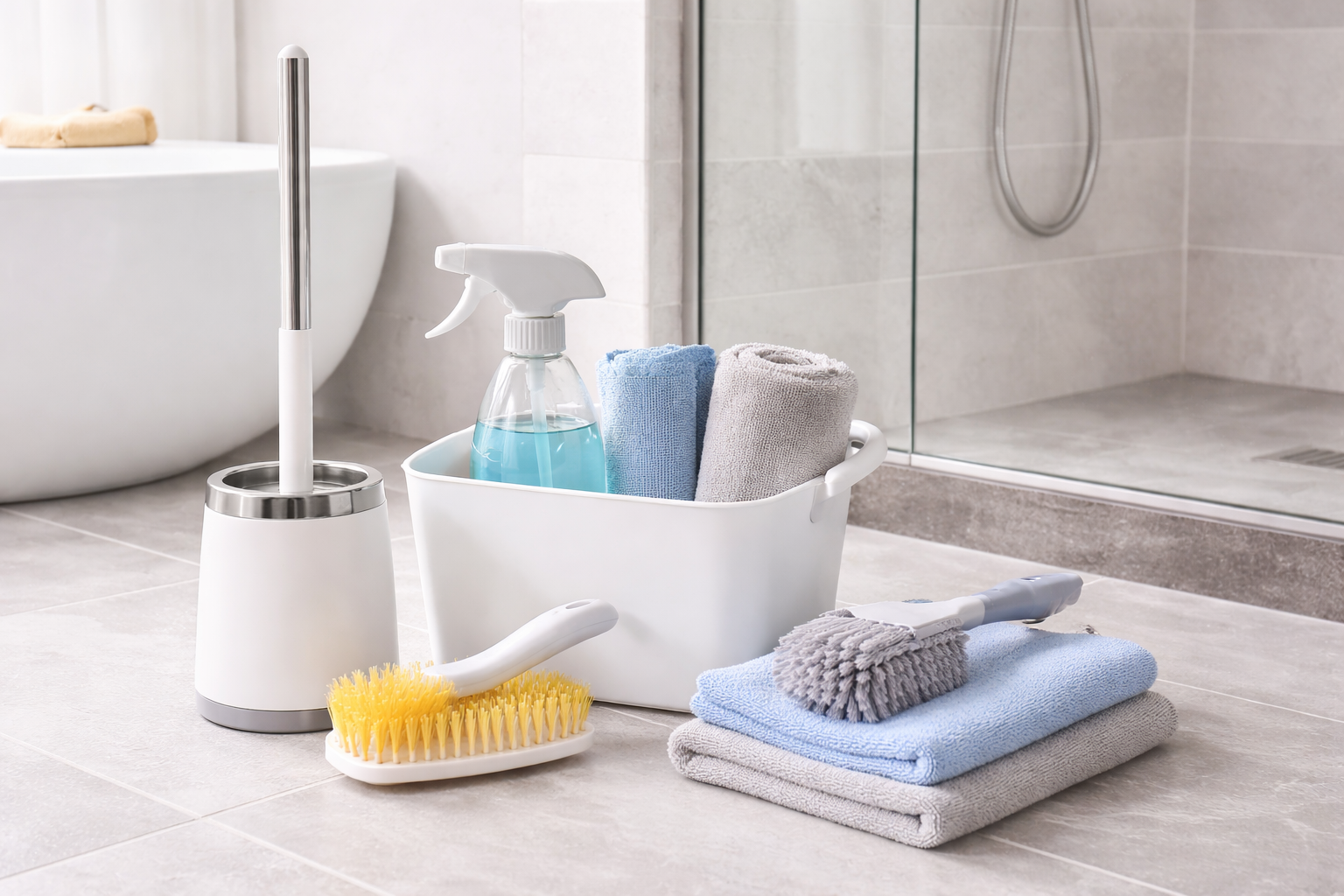
Bathroom Cleaning Tools: Must Have Essentials
A clean bathroom feels better. It looks better, smells better, and it is safer for your family. The good news is you do not need expensive gadgets to keep it fresh. You just need the right bathroom cleaning tools and a simple routine you can follow every week.
In this guide, you will learn which bathroom cleaning tools matter most, what each tool is used for, and how to build a small kit that makes cleaning faster. When you choose the right bathroom cleaning tools, you will scrub less, clean quicker, and get better results every time.
Bathroom cleaning tools you should always keep at home

When your tools are ready, cleaning becomes easier. You do not waste time searching for supplies. You also avoid using the wrong tool on the wrong surface.
Here are the core bathroom cleaning tools that cover almost everything.
Bathroom cleaning tools for everyday wipe downs
Daily cleaning does not need heavy scrubbing. It needs quick tools that make the bathroom look good in minutes.
Microfiber cloths
Microfiber cloths are one of the most useful bathroom cleaning tools. They pick up dust, soap scum, and water spots without leaving lint. Keep two types. Use one for mirrors and chrome, and another for countertops and shelves. Wash them often so they stay fresh. For more product visit : Supplyusa
Disinfecting wipes or reusable cleaning cloths
Wipes are helpful for quick touch ups on toilet seats, flush handles, and sink areas. If you prefer reusable options, use a cloth with a spray cleaner and toss it in the laundry after.
Squeegee for glass and tiles
A small shower squeegee helps prevent water spots and soap buildup on shower doors and tiles. This tool saves time because it reduces future scrubbing.
Bathroom cleaning tools for deep cleaning days
Weekly cleaning is where your bathroom stays truly healthy. You need a few stronger tools for floors, grout, and hard water marks.
Scrub brush
A medium scrub brush works for tubs, sinks, and tile walls. Look for a comfortable grip. A stiff brush helps with textured surfaces, but do not use it on delicate finishes.
Detail brush or old toothbrush
A small detail brush is perfect for corners and tight spaces. Use it around faucets, drain edges, and behind toilet bolts. This is one of the most overlooked bathroom cleaning tools, but it gives the biggest visual improvement.
Non scratch sponge
Use a non scratch sponge for soap scum on tubs and shower walls. Avoid harsh pads on acrylic or glossy surfaces. Scratches can trap dirt and make the surface harder to clean later.
Grout brush
Grout holds onto stains. A grout brush has firm bristles that fit into grout lines better than a normal brush. If you have tile floors or a tiled shower, this tool is worth it.

Bathroom cleaning tools for toilets
Toilets need their own set of tools. This keeps germs from spreading to other areas.
Toilet brush with holder
Choose a brush with a sturdy handle and a holder that allows airflow. If the brush stays wet in a closed container, it can smell bad. Replace the brush regularly.
Disposable toilet wand system
Some people prefer a disposable wand. It can feel more hygienic because you throw away the scrub pad after use. It costs more long term, but it is simple and clean.
Rubber gloves
Gloves protect your skin and make it easier to clean with confidence. Keep a pair only for the bathroom. Hang them to dry after each use.
Bathroom cleaning tools checklist for a simple cleaning kit
If you want a quick list to build your kit, start with these bathroom cleaning tools:
Microfiber cloths
Non scratch sponge
Scrub brush
Detail brush
Grout brush
Toilet brush and holder
Squeegee
Rubber gloves
Spray bottle for cleaner
Small bucket
This setup is enough for most homes. You can add extras later if you need them.
Bathroom cleaning tools for showers and tubs
Showers collect soap scum, body oils, and hard water marks. The right bathroom cleaning tools make a big difference here.
Bathroom cleaning tools that remove soap scum
Soap scum is easier to remove when you clean often. A non scratch sponge and a scrub brush are your best pair. Use the sponge for larger areas and the brush for corners and edges.
A squeegee helps a lot too. If you use it after every shower, you will reduce buildup and keep the shower cleaner longer.
Bathroom cleaning tools for grout and corners
Grout lines and corners are where dirt hides. Use a grout brush for the lines and a detail brush for the corners. Work in small sections. If you try to rush, you will miss the spots that matter most.
Bathroom cleaning tools for sinks, mirrors, and counters
The sink area is usually the first place people notice. Water spots and toothpaste marks build up fast.
Bathroom cleaning tools for a streak free mirror
Use a clean, dry microfiber cloth for mirrors. If you need spray, apply it to the cloth, not the mirror. This reduces drips and keeps the edges clean. A second dry cloth can help buff out streaks.
Bathroom cleaning tools for faucets and handles
Faucets collect water spots and fingerprints. A microfiber cloth works well, and a detail brush helps clean around the base. If you have hard water, cleaning more often prevents crusty buildup that is harder to remove later.
Bathroom cleaning tools for floors
Bathroom floors collect hair, dust, and moisture. A good floor routine keeps the room smelling fresh.
Bathroom cleaning tools for quick floor cleaning
A small broom and dustpan is handy for hair and dust. A microfiber mop works well because it picks up dirt without pushing it around. If you prefer a standard mop, keep it clean and let it dry fully after use.
Bathroom cleaning tools for edges and tight spaces
Use a detail brush along baseboards and around the toilet base. These areas hold dirt and make the bathroom look messy even after you mop.
How to choose bathroom cleaning tools that last
Not all tools are equal. Some fall apart quickly or scratch surfaces. Here is what to look for when buying bathroom cleaning tools.
Comfort and grip
If a handle hurts your hand, you will avoid using it. Choose tools with a comfortable grip.
Right bristle strength
Very stiff bristles can damage delicate surfaces. Use stiff brushes for grout and tough spots. Use softer sponges for tubs and glossy finishes.
Easy to clean and dry
Tools that dry quickly stay fresher. Airflow matters. Avoid keeping wet tools trapped in a closed container.
How to use bathroom cleaning tools in a simple weekly routine
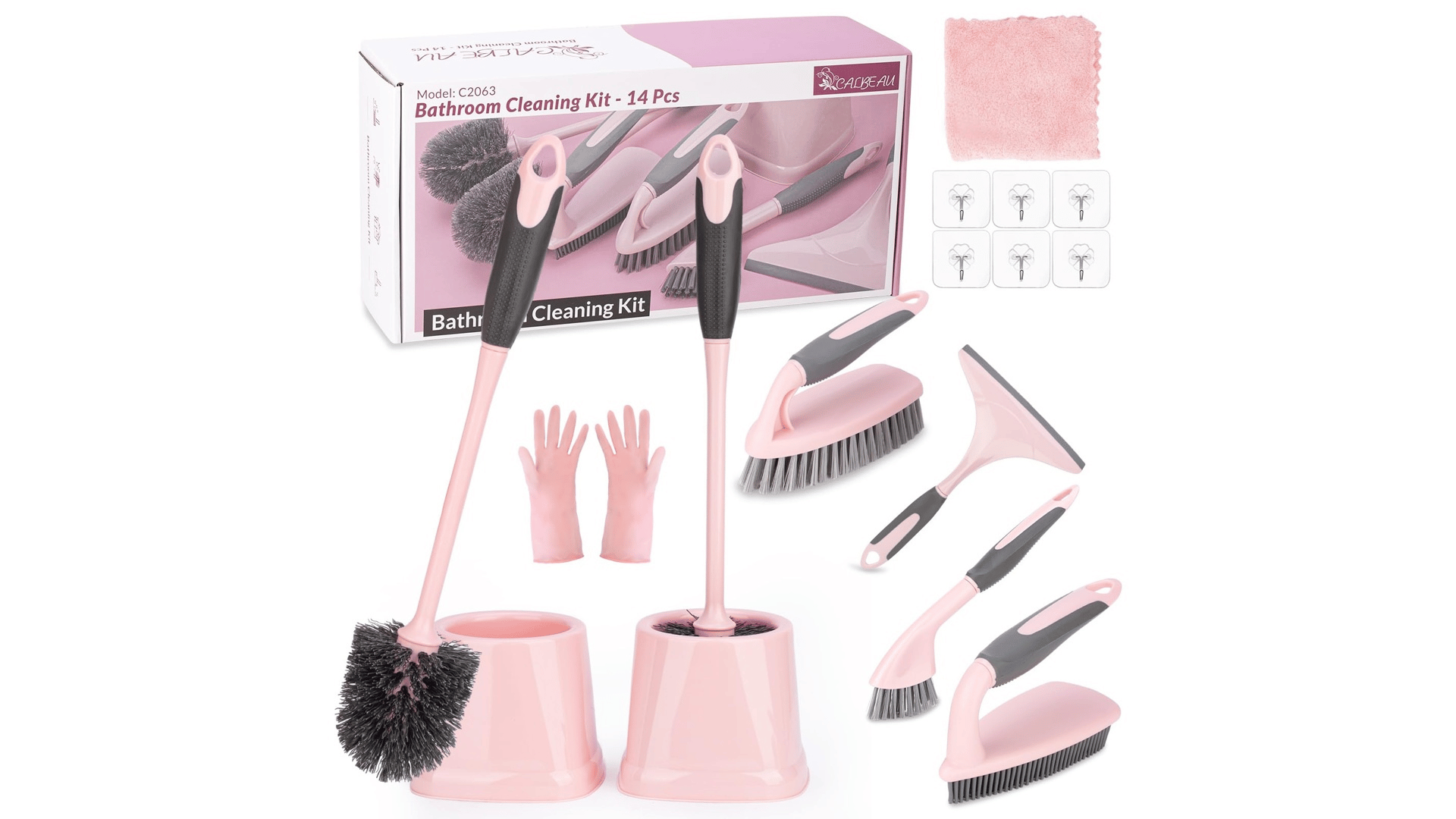
Bathroom cleaning tools kit with essential items for weekly cleaning
A routine keeps your bathroom clean without long cleaning days. Here is a simple plan you can follow.
Step 1: Clear surfaces and start high
Remove items from counters and shower corners. Start with mirrors and shelves. Dust or wipe first. Dirt falls downward, so cleaning top to bottom saves time.
Step 2: Clean the sink area
Use a microfiber cloth and a sponge. Scrub lightly, then wipe dry. Use a detail brush for tight spots.
Step 3: Clean the toilet
Put on gloves. Use your toilet brush and cleaner. Wipe the outer areas with a separate cloth or disposable wipe. Do not use the same cloth on other surfaces.
Step 4: Clean the shower and tub
Use your scrub brush and sponge. Focus on soap scum and corners. Use the grout brush on grout lines.
Step 5: Finish with the floor
Sweep first. Then mop. Pay attention to edges around the toilet and baseboards.
This routine uses your bathroom cleaning tools in the right order and keeps the process simple.
Mistakes to avoid with bathroom cleaning tools
Even with great tools, a few mistakes can cause problems.
Using one cloth for everything
This spreads germs. Keep separate cloths for mirrors, counters, and toilet areas.
Using scratchy pads on shiny surfaces
Scratches make surfaces look dull and hold dirt. Stick with non scratch tools for tubs and sinks.
Not cleaning your tools
Dirty tools clean poorly. Rinse brushes and sponges. Wash microfiber cloths. Let everything dry fully.The best bathroom is not the one cleaned once a month. It is the one kept clean with small habits. The right bathroom cleaning tools make that easy. Start with a basic kit, keep it organized, and follow a simple routine every week. You will spend less time scrubbing and more time enjoying a bathroom that feels fresh and healthy.